Why Push-Pull Balance
Is Not Enough for Shoulder Health
And why your lats might be part of the problem.
Published: April 2026
The Problem Many Lifters Don’t See
A common piece of advice in strength training is:
“Balance every push with a pull.”
On the surface, it makes sense:
- Bench press → add rows or pull-ups
- Chest work → balance with back work
But this idea assumes something that isn’t always true.
It assumes that all pulling movements naturally counteract the effects of pushing.
They don’t.
The Lat Problem Nobody Talks About
Most lifters think of the lats as:
- A back muscle
- A pulling muscle
- Something that balances out chest work
That’s only half the story.
Your lats also:
- Contribute to internal rotation of the shoulder
- Can become tight and overactive
- Restrict overhead positioning and shoulder mechanics
So when you:
- Bench press regularly
- Then add pull-ups, pulldowns, or rows
You may actually be:
👉 Reinforcing the same restriction pattern
Instead of actually fixing it.
What This Looks Like in Real Training
This shows up in ways that are easy to overlook:
- Shoulders drifting forward at rest
- Tightness when reaching overhead
- Difficulty maintaining proper pressing mechanics
- Shoulder discomfort that comes and goes
And the frustrating part?
You’re doing what you’ve been told:
- You’re training your back
- You’re “balanced” on paper
But something still feels off.
The Missing Piece: Lat Mobility
A key idea, inspired by Built From Broken by Scott Hogan:
Tight lats can limit shoulder positioning and contribute to dysfunction.
Which leads to a simple but overlooked conclusion:
👉 Lat mobility matters just as much as lat strength
And not occasionally.
Not just after workouts.
👉 Daily, low-effort work beats occasional stretching every time
Simple Lat Mobility Drill
You don’t need anything complicated.
This can be done in just a minute.
Bench-Anchored Lat Stretch
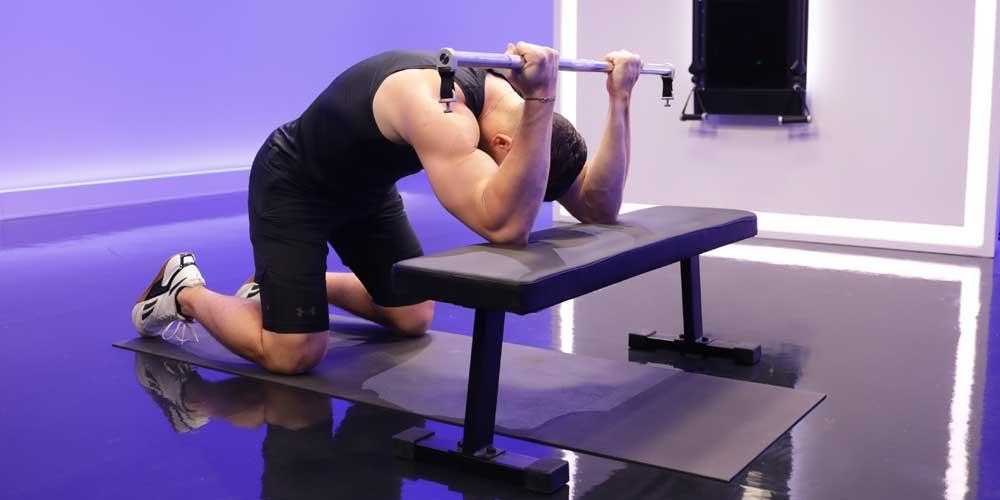
How to do it:
- Kneel in front of a bench
- Place elbows on the bench
- Hold a light bar with a palms-up grip, shoulder-width apart
- Sit your hips back while keeping arms extended
- Let your chest drop toward the floor
Focus:
- Keep ribs down (don’t over-arch your lower back)
- Feel the stretch along the sides of your torso
How Often Should You Do This?
This is where most people get it wrong.
Not:
- “After upper body day”
- “When I feel tight”
Instead:
👉 Daily — 60 seconds is enough
That’s all it takes to:
- Maintain range of motion
- Improve shoulder positioning
- Reduce long-term irritation
The Takeaway
“Push-pull balance” isn’t wrong.
It’s just incomplete.
If your lats are tight, more pulling won’t fix the problem—it may reinforce it.
👉 Strength matters
👉 But mobility determines how that strength is expressed
What's Next
This is the first in a series on shoulder health.
Next:
Why external rotation strength is the missing link for most lifters
Ready to start tracking your workouts?
Start your free trial — no credit card required.